BAKING
GRAINS
How to Sourdough
Theo3 October 20204 daysNo comments yet
So, someone gave you some starter and now you feel the need to make bread. And you should — there's no better way to learn that £4 for a loaf from a bakery is a bargain. Joking aside: it isn't hard, and most of the four days is waiting rather than working.
Ingredients
ONE TABLE LOAF
×1
×1.5
×2
ORIGINAL
GRAMS
OUNCES
STARTER · PER FEED
30 g
Starter you keep back
30 g
Water, boiled and cooled
30 g
White bread flour
THE LOAF
100 g
Leaven, built the night before
350 g
Water
400 g
White bread flour
100 g
Wholemeal bread flour
10 g
Fine sea salt
Weigh everything, including the water. Cups vary by how you scoop them, and hydration is the one number this loaf actually cares about.
METHOD
DIAGRAM
At a glance
- Makes: 1 large loaf
- Active time: 45 minutes
- Start to loaf: 4 days
- Suits: vegan, freezes well
What you'll need
- A kitchen scale — non-negotiable
- At least one small glass jar with a lid, weighed empty
- White and wholemeal bread flour
- A proofing basket or banneton — a mixing bowl works, without the pattern
- A heavy lidded crockpot that can go in the oven
Three things nobody warns you about
- You have to throw most of your starter away every time you feed it. Yes, really. Keep the discard in a second jar for pancakes and muffins, or bin it — both are fine.
- The starter survives weeks in the fridge unattended. You can still go on holiday, forget to bake, and have a normal life.
- "Bread flour" matters — plain flour hasn't the protein, and no amount of technique makes up for it.
Feeding the starter
Feeding means discarding most of it and giving the rest more flour and water. I keep 30g of starter and add 30g water and 30g white bread flour — little waste week to week, and still more than enough for one loaf.
If you know what the empty jar weighs this is easy: jar on the scale, pour out starter until you're at jar + 30g, tare, add water, stir smooth, tare, add flour, stir smooth. Leave it on the counter a few hours until bubbly. Not baking this week? Back in the fridge.
If I'm not baking, I take it out once a week, let it warm for an hour, feed it, leave it a few hours, then back in the fridge. That's the whole maintenance routine.
The loaf
Mix the flours and water and leave it an hour before the leaven and salt go in — the flour hydrates and the dough comes together with far less work. Then four sets of pull-and-fold, half an hour apart, and you're done handling it.
- Mix — Flours and water first, an hour's rest, then leaven and salt.
- Prove — Four pull-and-folds, 30 minutes apart, then shape and into a floured banneton. Fridge overnight.
- Bake — Crockpot preheated to 230°C. Twenty minutes with the lid on, twenty-five with it off, until it's deep brown and sounds hollow.
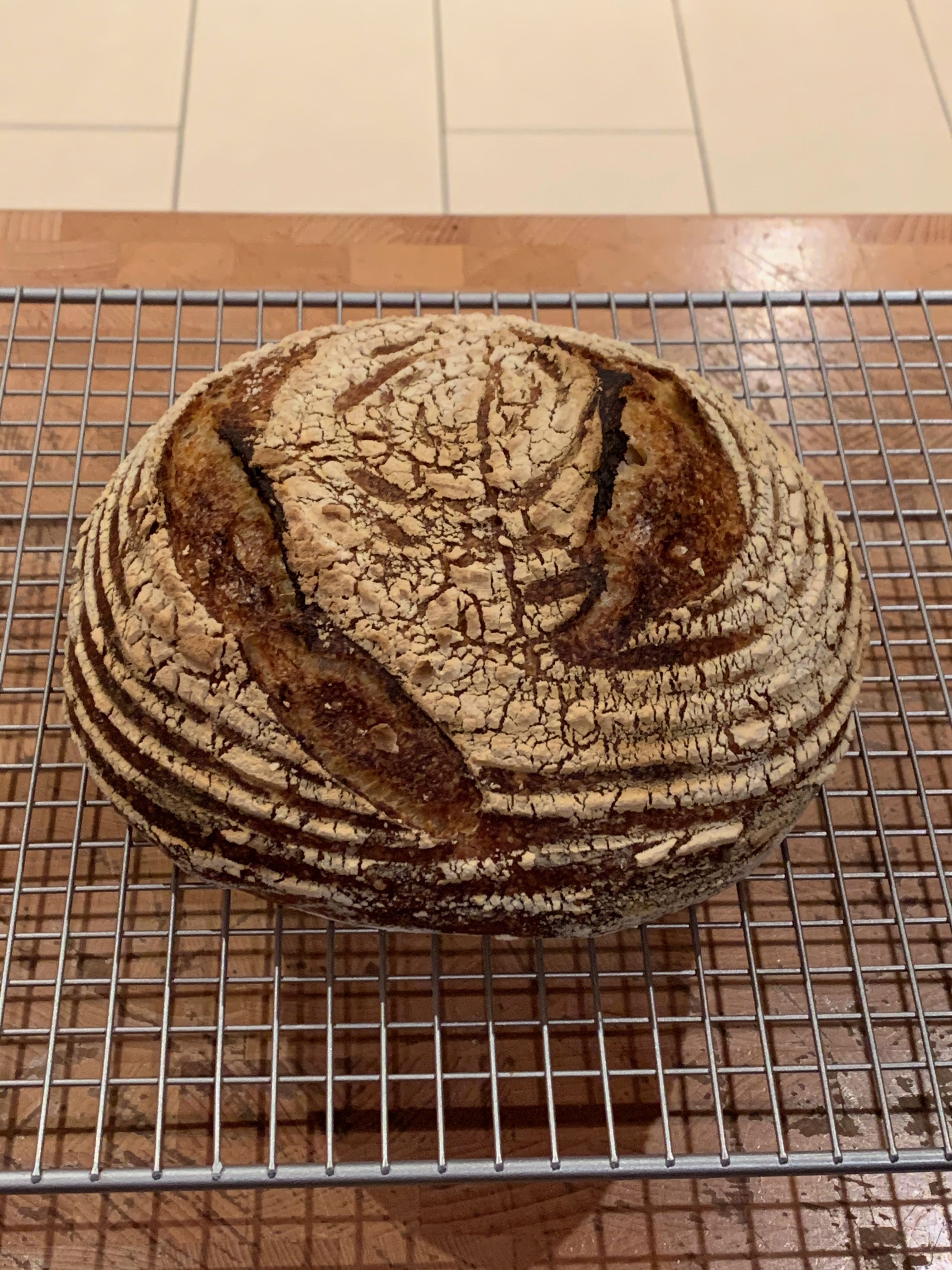
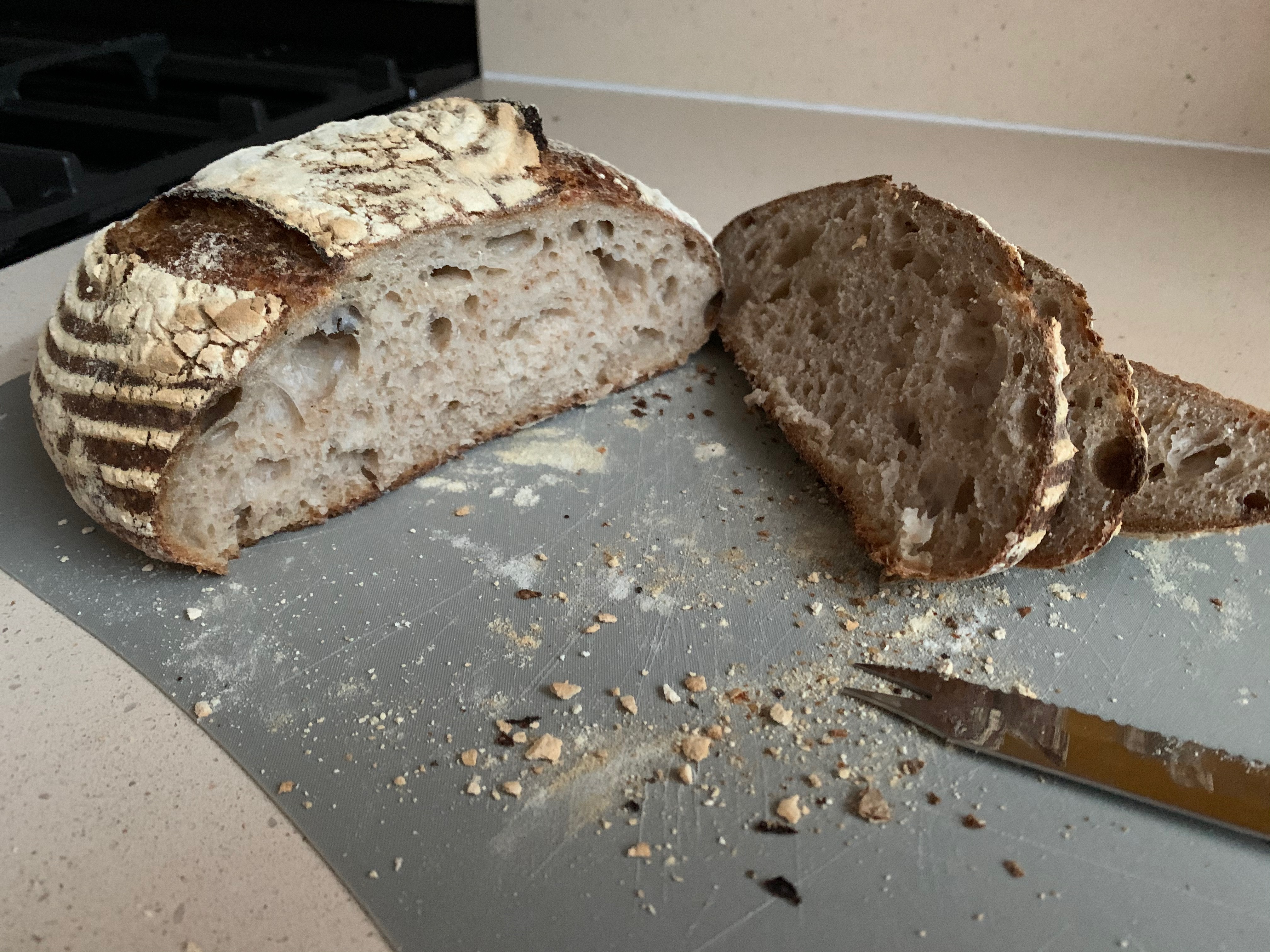
- Cool — At least two hours, so the crumb can set. This is the hardest instruction in the recipe.
Timeline
- Day 1 — Starter out of the fridge in the morning, let it warm, feed it. Feed again in the evening.
- Day 2 — Feed around midday. Build the pre-ferment in the evening.
- Day 3 — Mix the dough, prove, into the fridge overnight.
- Day 4 — Bake. Then wait, properly, before you cut it.
Where this came from
I follow the Table Loaf from Food52 — the video is the best way to see the techniques, and her voice is very soothing. Starter maintenance follows Food52's refrigerator method. For the discard, those banana nut muffins are genuinely amazing.
No comments yet
Be the first to weigh in.
ADD YOURS
Shack Life Quarterly · Theo & Dave · London